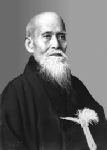
AIKIDO comes from the combat techniques of the Samurai, now reworked and synthesized to teach harmony and reconciliation. Morihei Ueshiba
(1882-1968), renowned as O-sensei (great teacher), investigated and
studied many traditional Japanese martial arts before opening his own
school in 1925. He taught a new martial art which borrowed
significantly from traditional sword, staff, and hand to hand styles of
fighting, most notably from Daito-Ryu Aiki-jujitsu.
Ueshiba diligently applied himself to the reworking of the combat techniques he had learnt studying these styles, and synthesized them into a form that taught harmony and reconciliation rather than violence and death. In this way, he satisfied his belief that true Budo (the way of the warrior) was the way of peace.
Since the 1920's, several styles of Aikido have developed. One of Ueshiba's foremost students, Gozo Shioda
(1915-1994), evolved the Yoshinkan style which incorporates precision
in executing techniques with the study of basic movements. Detailed
instruction, and the identification of basic movements and forms, has
provided a teaching methodology that is easily learned and is suitable
for both practical self-defense and personal development.
Yoshinkan Aikido was founded after World War Two. This style of
aikido is occasionally called the hard style because the training
methods are a product of the gruelling period Soke Shioda spent as a
student of Ueshiba.
Yoshinkan Aikido has some 150 basic
techniques which are practiced repeatedly; these enable the student to
master the remaining ones, which total some 3000 overall.
The Yoshinkan style of Aikido emphasises the self-defence
aspect of the art.
Yoshinkan Aikido is not a sport. Aikido is the development and
strengthening of the body and mind, and the practical side of Aikido
must never be forgotten. However, Aikido is for all, irrespective of
age, sex, race or culture.